If you have multiple curl types, textures, or porosities on one head, you already know the struggle. Your hair behaves differently depending on where you look, and no single piece of advice ever seems to apply to your whole head at once.
I get it. My hair is a mix of wavy and curly, somewhere between 2B and 3A depending on the section. My roots tend to come in straighter. The underlayer has tighter curls. The front pieces are looser. My ends stretch out over time, or in dry climates, and lose definition faster than the rest. My hair is also on the finer side, low density overall, and somewhere between low and medium porosity.
For a long time I kept trying to find one perfect routine that would work for all of it at once. That was the wrong approach. What actually helped was learning to stop trying to manage every difference and start focusing on what bothered me most.
That is what this post is about. I am not going to tell you to section your hair and use five different products on five different areas. I am going to show you a simpler way to think about it, which is the same approach I use on my own hair.

Why Your Hair Has Multiple Curl Types
Most people do not have one single curl pattern, porosity, or texture across their entire head. This is completely normal.
Your curl pattern can vary based on where the hair grows. The nape, the crown, the underlayer, and the sides can all have slightly different patterns. This has nothing to do with how you style your hair or what products you use. It is just how your hair grows.
Porosity also tends to vary. Roots are often lower porosity because that hair is newer and less exposed to damage. Ends tend to be higher porosity over time from heat, friction, color, or just age. This means the same product can absorb differently depending on which part of your hair you are applying it to.
Texture, meaning how fine or coarse your individual strands are, can shift across different sections of your head too. You might have finer strands in the front and slightly coarser ones in the back.
None of this needs to be perfectly mapped out before you can move forward. You just need a general sense of what is going on.
The 3 Differences That Actually Matter (And Why They Conflict)
When you have mixed hair, there are three things worth paying attention to. Not because you need to treat each one separately, but because understanding why they behave differently helps you make smarter product decisions.
Curl pattern affects how your hair clumps and how techniques work on it. Looser sections need less encouragement to clump but tend to lose definition faster. Tighter sections hold their shape better but can feel dryer.
Texture determines how much product weight your hair can handle. Fine hair gets weighed down easily and needs lightweight formulas. Coarse hair needs richer conditioning and can handle heavier products. If you have mixed textures on one head, your fine sections will always be the limiting factor for product weight.
Porosity affects how moisture enters and stays in the hair. Low porosity hair is slower to absorb, tends to repel water at first, and does not need heavy sealing products. Higher porosity hair absorbs quickly but loses moisture just as fast and benefits from products that help seal the cuticle.
Here is where it gets complicated. These three things do not always point in the same direction. Your coarser sections might want heavier products, but if the rest of your hair is fine, those heavy products will weigh everything else down. Your high porosity ends might want more moisture, but if your roots are low porosity, loading them with heavy creams causes buildup and flatness.
You cannot satisfy every section at once. So you stop trying to.
If you are still working out your own hair’s characteristics, the Curl Type Clarity workshop is a good starting point. It walks you through density, texture, and porosity in a way that is actually usable.
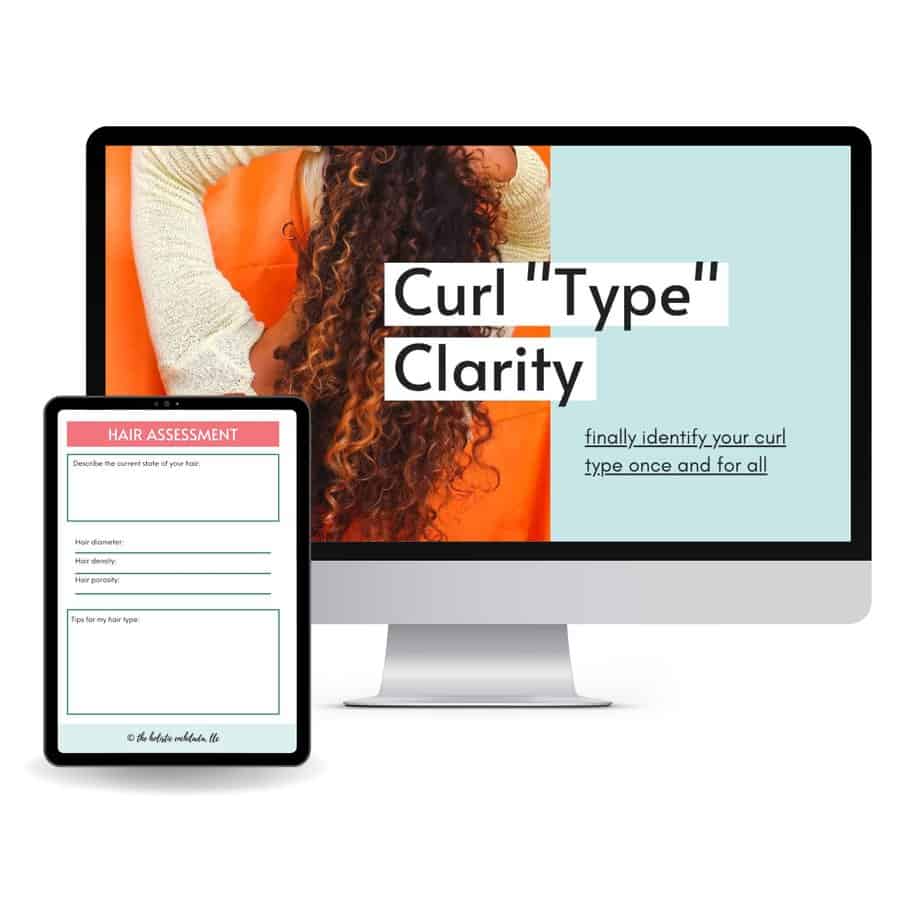
Curl “Type” Clarity Workshop
Identify your hair type once and for all with Curl Type Clarity
A short and sweet training to help you identify your hair type and confidently move along your curly hair journey, even as a beginner!
We earn a commission if you make a purchase, at no additional cost to you.
Step 1: Target Your Biggest Problem First
Instead of trying to customize for every difference in your hair, start by identifying what frustrates you most. That one thing is where your routine should be built around.
For me, the biggest issues are hold and volume. My hair is fine and low density overall, which means it loses hold fast and tends to look flat. It also feels very soft, almost too soft, which sounds nice but actually means it does not hold a style well.
So my routine is built around structure and volume first. I use products that add grit and texture to counteract how soft my hair naturally is. I use a volumizing foam to build body. I seal everything with a hard hold gel so the style lasts. Moisture is not my primary concern because my hair does not tend to feel dry. Hold is.
Your biggest problem might be different. Dry ends. Frizz. Flat roots. Undefined sections. Whatever it is, that is where you start.
When you build your routine around your most frustrating issue, everything else becomes easier to manage around it. You stop adding products to solve problems that are not really problems for your specific hair.
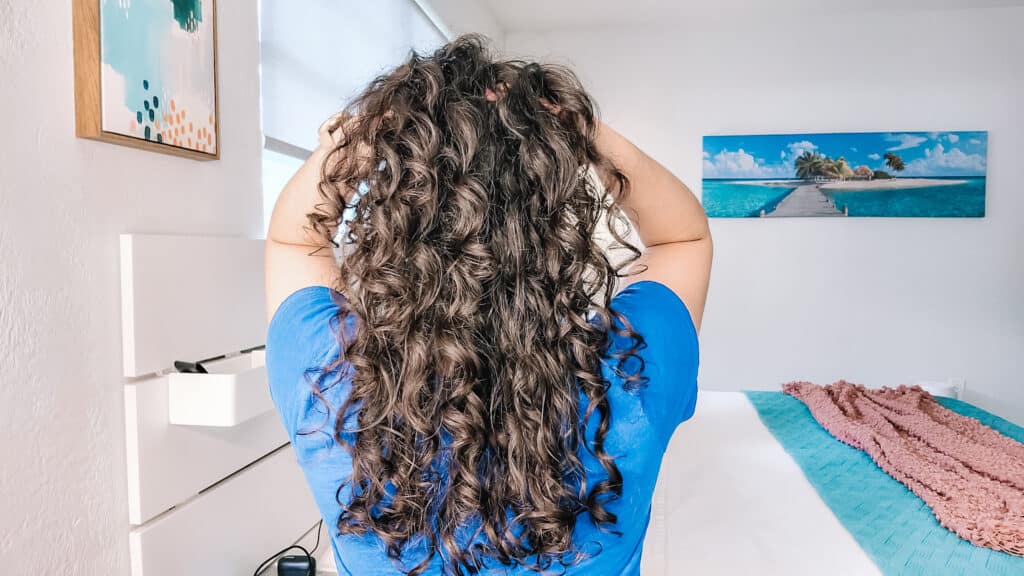
Step 2: Adjust by Zone, Not by Strand
You do not need to customize for every single strand. But thinking about your hair in broad zones is actually useful and does not require complicated sectioning.
Roots are usually the newest, least damaged hair. They tend to be lower porosity and finer. This is where you want to be lightest with product. Heavy creams and oils applied at the root are a fast track to flat, greasy roots.
Mid-lengths are your baseline. This is typically where the majority of your hair’s character lives. Choose products based on what this section needs, and let that drive the rest of your decisions.
Ends are usually the oldest, most exposed hair. They tend to be higher porosity and drier. This is where a little extra moisture is often worth applying. A bit more leave-in or a small amount of cream focused on the ends can make a noticeable difference without overloading the rest of your hair.
You do not need to stop and section your hair for this. It is more about being intentional as you apply. Lighter at the roots, a bit more at the ends. That is it.
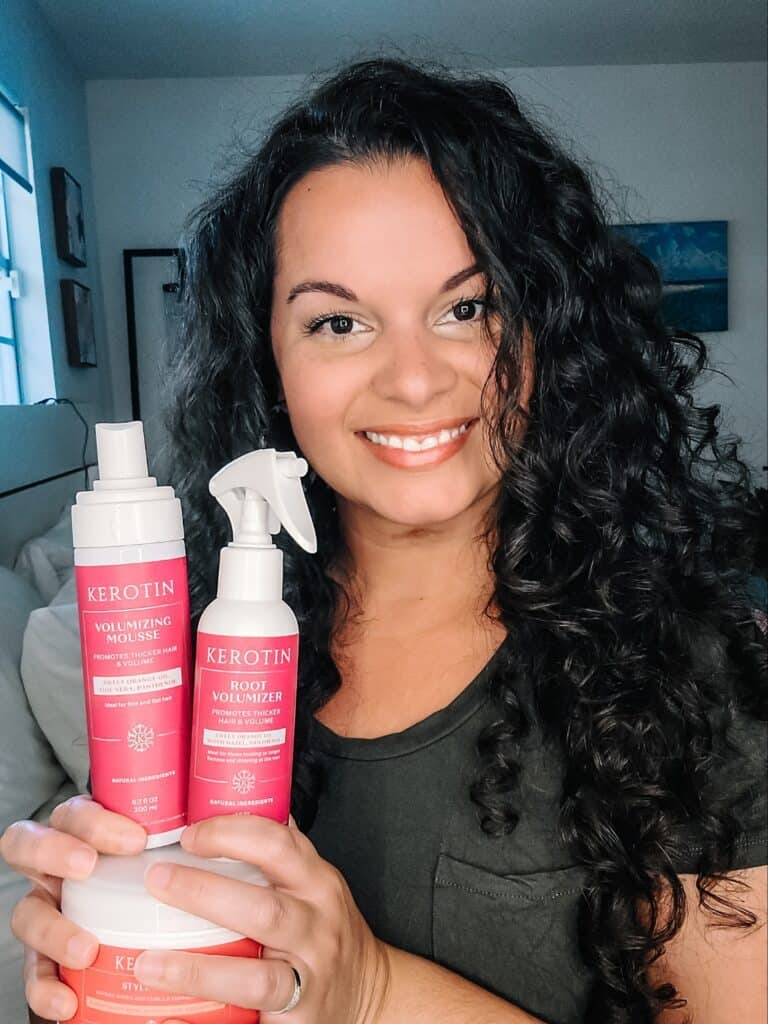
Step 3: Choose Products Based on Texture
When you have mixed hair, your texture is what should drive your product choices, not your curl pattern.
Curl pattern is about shape. Texture is about how much weight your hair can handle. And weight always wins.
If you have fine or mostly fine hair, you need lightweight products regardless of your porosity or your curl pattern. Heavier products will not give your looser sections more definition. They will just flatten everything. Look for products that are water-based, low in heavy oils and butters, and have a thinner consistency.
If you have mostly coarse hair, you have more flexibility. Your hair can handle richer conditioning and heavier stylers. In fact it often needs them. Products that feel too heavy for fine hair are often exactly right for coarse hair.
If you are in the middle, or have genuinely mixed textures across your head, start with lighter to mid-weight products and adjust from there. It is always easier to add weight than to remove it.
Adding grit or texture to a product lineup, like using a volumizing foam or a product with some hold before your gel, can also increase how well a style holds without relying on heavy creams to do the work.
If you want specific product recommendations matched to your texture and porosity, the Curly Product Handbook has a product matching guide that does exactly that. It is the fastest way to stop guessing and actually find what works for your specific combination.
Step 4: Know What You Are Actually Trading Off
This is the part nobody really talks about, but it made the biggest difference in how I approach my own hair.
Some things you want from your hair are in direct conflict with each other.
Less frizz often means less volume. If you seal the hair tightly to prevent frizz, you flatten it. If you go lighter on product to get volume, you get more frizz. You cannot fully max out both at the same time.
More moisture often means less hold. The softer and more moisturized your hair is, the harder it is for styling products to grip and hold a shape. My hair is already soft by nature, so I actually avoid adding too much moisture and instead prioritize hold ingredients.
Looser, more natural-looking curls often means less longevity. Defined styles with hard hold gel last longer but look more styled. Softer approaches look more natural but may not make it past day one.
None of these tradeoffs have a right answer. But you need to know which direction you want to lean before you can build a routine that actually makes sense for your hair.
My hair will never be full. That is just not what it does. So instead of chasing fullness, I shoot for a little more volume than I would naturally get, which is realistic for my hair. When I stopped trying to get everything at once, my results got a lot more consistent.

Step 5: Use Targeted Application Instead of More Products
You do not need a different product for every section of your hair. You need to be more deliberate about how you apply what you already have.
More product on looser sections can help them clump and define better without changing your whole routine. Less product at the crown prevents flatness and buildup. A little extra leave-in or cream just on the ends addresses dryness without weighing down the roots.
Styling upside down naturally gets more product to the mid-lengths and ends and keeps the root area lighter. Scrunching in gel section by section lets you control how much goes where.
This kind of targeted application gets you a long way without adding complexity.
Step 6: Accept That Your Hair Will Not Look Uniform
One side may curl more than the other. Some sections will always be looser. The underlayer might be more defined than the top. That is not a product problem. That is just your hair.
The goal is not identical curls from root to tip across your whole head. The goal is hair that looks balanced and healthy and feels good to you. Those are not the same thing.
When I stopped trying to force uniformity, I also stopped being frustrated by wash days that were actually fine. My hair was doing what my hair does. I just had to let it.

Simple Routine Example
This is a basic starting framework for mixed curl types that skews toward finer, lower-density hair. You will need to adjust based on your own texture, porosity, and goals.
Cleanse: A low poo or clarifying shampoo depending on how much buildup you have. For low porosity hair, clarifying regularly is important. Build up blocks moisture from getting in, which makes everything else less effective.
Condition: A lightweight to mid-weight conditioner focused on the mid-lengths and ends. For fine or low density hair, rinse fully. You probably do not need to leave much in at the shower stage.
Leave-in (optional): If your hair needs it, a small amount of lightweight leave-in focused on the ends. Fine or low density hair often does not need a separate leave-in if the conditioner is doing its job.
Styler 1 (optional, for volume/grit): A volumizing foam or mousse applied before gel adds texture and body. This is especially helpful for fine hair that loses hold fast.
Styler 2: A hard hold gel applied to wet hair, scrunched in well. This is the one product that makes the biggest difference for hold, longevity, and frizz control regardless of hair type. Apply more to looser or drier sections.
Dry: Diffuse for more volume and more even results across mixed sections. Air drying tends to let the tighter sections overtake the looser ones, which can make the overall look less balanced.
Once your hair is fully dry, scrunch out the crunch to soften the cast.
This is a starting point. The Curly Product Handbook walks through the full decision tree for product types, ingredients, and what to look for based on your specific hair characteristics. It takes a lot of the guesswork out.

Curly Product Handbook
If you need help finding the right products for your hair, then the Curly Product Handbook can help!
Determine your hair type, learn about products and ingredients, and choose from a list of vetted products based on your hair type.
We earn a commission if you make a purchase, at no additional cost to you.
Common Mistakes to Avoid
Applying heavy cream or oil all over. If you have fine or mixed texture hair, this flattens your roots and weighs down the sections that did not need it.
Trying to force your looser sections to match your tighter ones. You can encourage clumping, but you cannot fundamentally change how a section of your hair grows. Work with it instead.
Ignoring your ends. They are usually the driest, most porous part of your hair and respond well to a small amount of extra moisture. This does not have to be complicated.
Adding more products instead of adjusting application. Most mixed hair issues are solved by how you apply, not by buying more things.
Giving up after one bad wash day. Mixed hair takes more trial and error to dial in than more uniform hair. That is not a character flaw. It is just the nature of it.
Bottom Line
You do not need a different routine for every section of your hair. You need a routine built around your most frustrating problem, with small adjustments for how you apply products in different zones.
My hair is a mix and it took a long time to stop fighting it. Once I focused on what my hair actually needed most, things got a lot simpler.
If you are still trying to figure out your own hair’s characteristics, start with the Curl Type Clarity workshop. And if you are ready to find specific products that match your texture, porosity, and density, the Curly Product Handbook is the most direct way to get there.
Trending Products

Ethique Shampoo Bars 3.88 oz

MAREE Keratin Hair Mask

Bed Head by TIGI Curls Rock Amplifier – Cur...